How to Build an AI Video Pipeline That Cuts Production Time by 99%
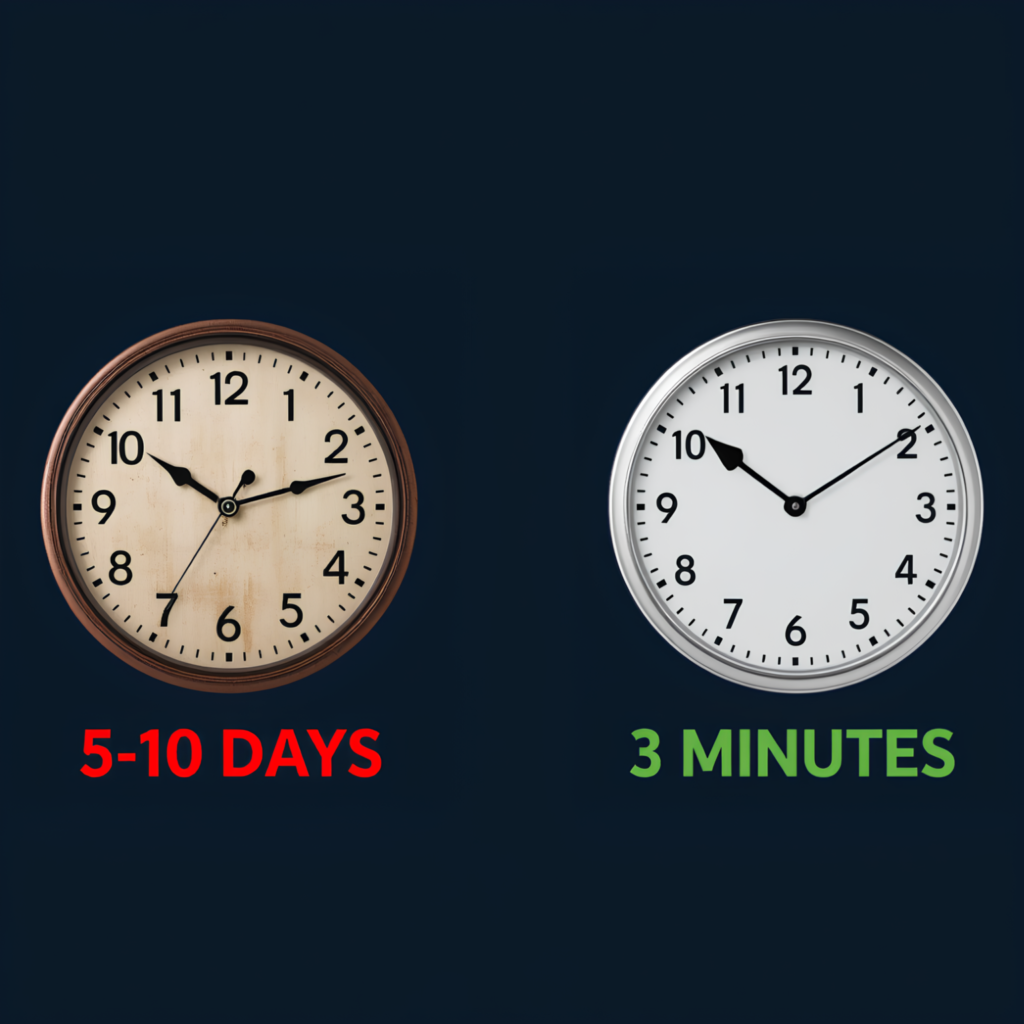
Video production has a dirty secret. Even a one-minute product demo takes 5 to 10 days and costs up to $2,000. For lean engineering teams that need a demo this week, that timeline is a hard blocker. That is exactly why we built PromptReel, an AI video pipeline that takes a text prompt and returns a fully produced MP4 in under five minutes, with no editor, no studio, and no waiting.
In this post, we break down exactly why traditional production fails, how our AI video pipeline works node by node, and what results it delivers.
The Problem With Traditional Video Production
Every team that needs a product video runs into the same four walls:
1. Time: 5 to 10 days per video
From brief to final asset, even an experienced team takes a week or more. That pace is too slow for a product launch or a sales cycle that moves in days.
2. Cost: $500 to $2,000 per finished minute
Standard agency pricing at this quality range simply does not scale. For teams that need 10 to 20 videos a month, the budget breaks fast.
3. Iteration speed: Every change restarts the cycle
Want to swap a call-to-action or adjust the tone? Back to day one. Traditional production has no fast iteration loop.
4. Visual continuity: Most AI video tools break narrative coherence
Standard AI video tools generate scenes independently. As a result, lighting shifts, visual style changes, and the final output looks like three different videos stitched together, because it is.
Our AI Video Pipeline: A 10-Node LangGraph Solution
PromptReel is a 10-node LangGraph StateGraph, an AI video pipeline where every intermediate artifact is a strictly typed Pydantic model. This means the pipeline is resumable, testable in isolation, and fully observable per node.
Here is how each node works:
Node 1: User Input
The AI video pipeline starts by capturing your prompt, style, mood, and duration. As a result, these parameters flow through every downstream node automatically, so nothing gets lost between steps.
Node 2: Script Generator
Google Gemini then generates three distinct script variations, each with different narrative angles, pacing styles, and calls to action. Instead of one script, you get three competing options to evaluate.
Node 3: AI-on-AI Script Evaluator
After that, a second Gemini call at temperature=0.3 scores all three variants against four criteria: narrative alignment, visual clarity, creative distinctiveness, and production feasibility. Specifically, it returns a structured ScriptEvaluation object, and the highest-scoring script moves forward automatically.
Node 4: Scene Splitter
With the best script finalized, the AI video pipeline breaks it into three detailed scene prompts. In addition, each prompt includes camera angle, subject, action, lighting, and transition instruction.
Nodes 5 to 7: AI Video Pipeline Continuity Engine
This is where the core innovation happens. The system generates each scene via the Freepik Video API. After generation, cv2.VideoCapture extracts the final JPEG frame. That frame then serves as the first-frame anchor for the next scene, so three independently generated clips feel like one continuous camera take.
Node 8: Video Stitcher
Subsequently, FFmpeg merges the three scene clips into one continuous video file.
Node 9: AI Music Brief Generator
Rather than using a generic music prompt, Gemini reads the full script, including narrative, pacing, camera movements, and transitions, and creates a context-aware brief for Beatoven.ai. The soundtrack therefore reflects what the camera is doing, not just what the video is about.
Node 10: Audio Mixer
Finally, FFmpeg combines the video track and the AI-composed soundtrack into the finished MP4.
Job persistence: FastAPI BackgroundTasks returns a job_id instantly. State persists in Supabase PostgreSQL, and the final video uploads to Supabase S3, returned as a public CDN URL.
Technical Architecture of the AI Video Pipeline
- Orchestration: LangGraph StateGraph (10 nodes, typed VideoAutomationState)
- Script generation and evaluation: Google Gemini
- Video generation: Freepik Video API
- Frame continuity: OpenCV (cv2)
- Video and audio stitching: FFmpeg
- Music brief: Google Gemini
- Music generation: Beatoven.ai
- Job state storage: Supabase PostgreSQL
- Video storage: Supabase S3 (CDN URL)
- API and async queue: FastAPI + BackgroundTasks
- Deployment: Docker
Before vs. After: AI Video Pipeline Result
Metric | Before | After |
|---|---|---|
Time per video | 5 to 10 days | 3 to 5 minutes |
Cost per video | $500 to $2,000 | $0.05 to $2 (API costs only) |
Daily capacity | 1 to 2 videos | Constrained only by API quota |
Script iterations | Manual revision cycles | Zero |
Music alignment | Manual brief | Auto-generated from script context |
Visual continuity | Editor-dependent | Guaranteed via last-frame anchor |
Why This AI Video Pipeline Actually Works
Most AI video tools treat generation as a single API call. We treat it as an orchestrated AI video pipeline instead, where every node has a specific job, every output is typed and inspectable, and the system can resume mid-run if a node fails.
The AI-on-AI evaluation step in Node 3 is especially important. Rather than accepting the first output, the pipeline generates three competing options and lets a deterministic evaluator choose the best one. This approach removes human subjectivity from a step that would otherwise need a reviewer in the loop.
Beyond evaluation, the last-frame continuity technique in Nodes 5 to 7 solves a problem that every AI video team faces but few handle cleanly. It works because the visual anchor preserves lighting, color grading, and subject positioning. These are the exact elements that make a viewer feel like they are watching one video, not three.
Who Should Deploy This AI Video Pipeline
PromptReel is well-suited for three kinds of teams:
- Marketing teams that need product demo videos on a weekly cadence
- Product teams that need to ship a demo before a launch window closes
- Agencies that want to offer video production at a price point that was not previously possible
In addition, PromptReel is available as a deployable solution, not a SaaS subscription, but a system we configure directly for your stack.
Conclusion
In summary, PromptReel shows what becomes possible when an AI video pipeline handles a full production workflow rather than a single task. The value is not in any one model or API. Instead, it lives in the orchestration, specifically typed state, deterministic evaluation, continuity-preserving generation, and async job management all working together.
If your team needs video production that moves at the speed of software development, PromptReel was built for exactly that.
For more on how we build agentic AI systems, explore our Agentic AI services and case studies.
Interested in deploying PromptReel for your team?
Book a free consultation