7 Reasons Your CFS Logistics Portal Must Replace WhatsApp Operations Now
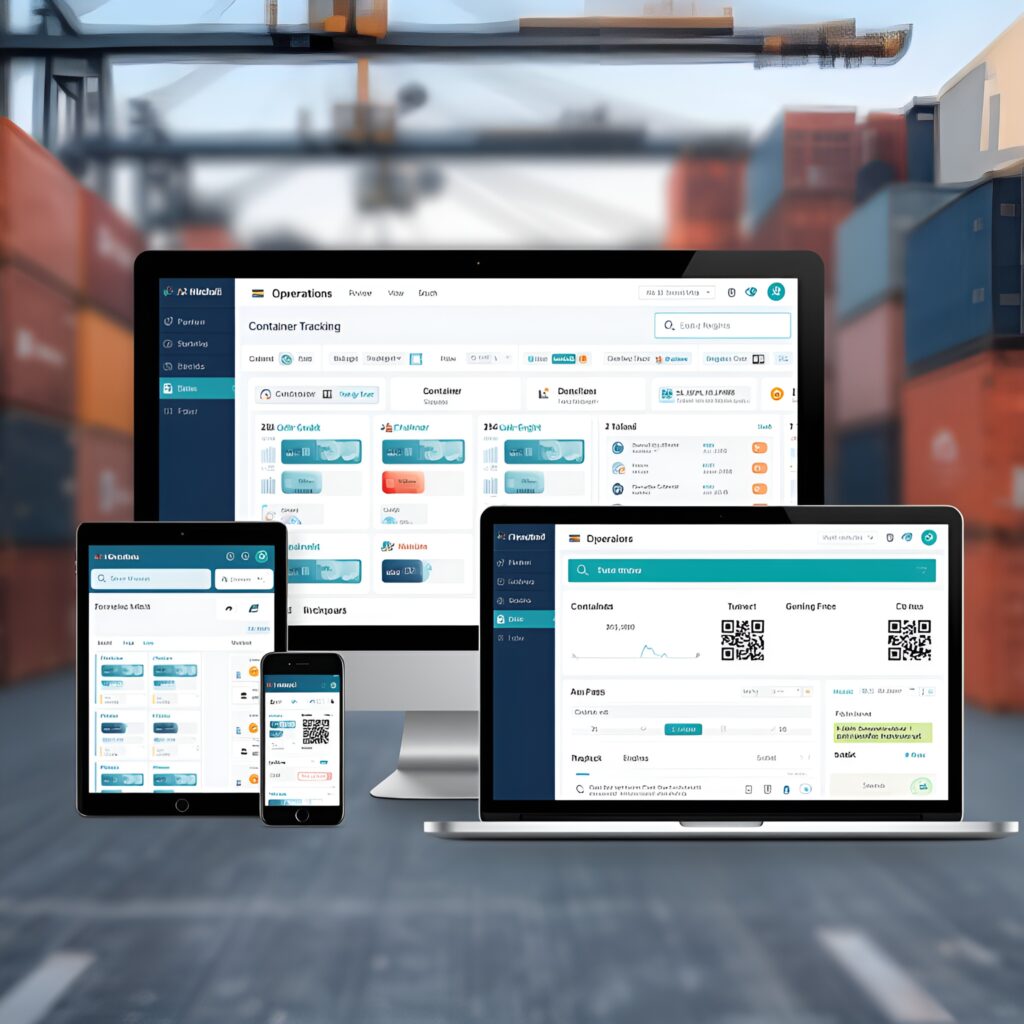
Most logistics operators running a Container Freight Station can tell you exactly how many containers moved through their yard last week. Almost none can show you a complete, auditable record of every request, document, and authorization that made those movements happen – or what the absence of a CFS logistics customer portal is quietly costing them in governance risk, disputed transactions, and staff hours lost to WhatsApp threads.
That gap is where logistics revenue leaks. Not in container handling capacity. Not in yard throughput. In the invisible space between activity and accountability — between what happened on the ground and what anyone can actually prove happened when a dispute lands on their desk.
At Madgical Techdom, we work with logistics operators across container freight, supply chain, and last-mile platforms. The same pattern appears at scale: facilities that feel operational are accumulating governance risk. BOE documents get exchanged over email with no version control. Gate movements get authorized over phone calls with no system record. One clearing agent quietly becomes the single source of truth for a shipment’s status. Then a dispute surfaces — and there is nothing to show except a WhatsApp thread from three weeks ago.
In this post, we cover what a CFS logistics customer portal actually needs to solve to govern operations at scale, which capabilities separate genuine operational control from the appearance of it, and how we built a system that eliminated WhatsApp dependency entirely – deployed across iOS, Android, and Web in a single offline-first codebase.
- Why WhatsApp is the wrong infrastructure for CFS logistics operations
- The four problems a CFS logistics customer portal must solve
- How we built the CFS logistics customer portal: features and architecture
- Outcomes after deployment
- When to invest in a CFS logistics customer portal
Why WhatsApp Is the Wrong Infrastructure for Your CFS Logistics Customer Portal
Messaging apps feel operational. They are fast, familiar, and require zero onboarding. For a small CFS facility handling a few dozen containers a week, they work.
For a Container Freight Station managing thousands of container movements, multiple Clearing House Agents, concurrent BOE claims, and regulatory compliance requirements — WhatsApp becomes a liability, not an asset.
The real cost of running CFS logistics operations without a proper customer portal is financial and legal, not just inconvenient:
- Document disputes have no clean resolution path — when two parties remember the exchange differently and neither has a timestamped audit trail, the dispute becomes a relationship problem instead of an operational one
- Status visibility requires human intervention — every customer who cannot self-serve their container status is a phone call that interrupts operations staff and adds to response backlog
- BOE data entry from PDFs consumes 15 to 30 minutes per document — at volume, that is a full-time role doing work that OCR automation can replace in seconds
- Gate authorizations over phone have no record — the vehicle that entered was authorized by someone, at some time, for some reason. When an incident occurs, none of that is traceable
- CHA management at scale is impossible without structure — runner boys operating across multiple clients, accessing sensitive shipment data, need permissions boundaries that no WhatsApp group can enforce
None of this shows up in a container throughput report. All of it shows up in disputes, delays, and audit failures.
The Four Problems a CFS Logistics Customer Portal Must Solve
Building a CFS logistics customer portal that actually governs operations — rather than just digitizing the chaos — requires understanding what breaks first when structure is absent. We see four failure modes, consistently, across facilities that have outgrown informal systems.
1. No Audit Trail in CFS Logistics Operations
Every action in a governed CFS logistics customer portal needs to be traceable: who requested it, who authorized it, what documents were attached, when it happened. Without that trail, disputes are unresolvable and compliance audits become a scramble through email inboxes.
In WhatsApp-operated facilities, the audit trail is a scroll through chat history. That is not governance.
2. Document Processing Bottleneck
BOE documents arrive as PDFs. Someone reads them. Someone types the data into a system. At 15 to 30 minutes per document, a facility processing hundreds of BOEs per week is burning thousands of staff-hours annually on manual data transcription.
The bottleneck is not staff capacity — it is the absence of OCR automation in the document workflow. A CFS logistics customer portal with automated extraction changes this from a manual task to an exception-handling step.
3. Zero Permissions Model in the Container Freight Station Portal
Customers, Clearing House Agents, and runner boys all have different operational roles. They should not have access to the same data, the same actions, or the same system view.
Without a role-based access control layer in the container freight station portal, everyone sees everything and anyone can do anything. That is not a feature — it is a compliance gap.
4. Multi-Stakeholder Complexity Without Structure
A CFS operation is not a two-party system. The customer owns the cargo. The CHA manages customs documentation. The runner boy executes the physical handoff. CFS operations staff manages the yard. Each role needs a different interface, different permissions, and a different notification model.
A logistics customer portal that serves all four stakeholders — without creating a permissions nightmare — is an architecture decision, not a UI problem.
How We Built the CFS Logistics Customer Portal
Here is what the solution required, feature by feature.
Real-Time Shipment Tracking – No Phone Call Required
Container-level to item-level drill-down. Filter by container type. Full activity timeline on every shipment. The customer who previously called operations staff for a status update now has a self-service answer in the CFS logistics customer portal within seconds.
This single capability alone accounts for a significant portion of the 40% improvement in customer service response time the client achieved after deployment.
Document Management with OCR – Eliminating the Data Entry Bottleneck
Azure Cognitive Services OCR extracts BOE fields automatically on document upload. High-confidence extractions — above 85% — auto-populate the relevant fields. Low-confidence fields are flagged for manual review with the original document visible alongside the extracted data.
The 15 to 30 minute per-document data entry process becomes seconds of exception handling. This is where the 50% reduction in document processing time comes from — not from staff working faster, but from removing the manual transcription step entirely.
Ownership Claim System – Structured Document Submission with Full Audit
Customers upload BL copy, BOE copy, and supporting documents through the CFS logistics customer portal. Every submission automatically routes to the EDI desk with the full document package attached and a timestamped audit trail. No email chain. No missing attachment follow-up. No dispute about whether the document was received.
CHA Management – Governed Access for a Complex Stakeholder Layer
GST verification and KYC registration built into the CHA onboarding flow. Sub-roles — runner boys — with Aadhaar verification, photo upload, and SMS-delivered passwords. Every CHA action is logged with the actor, timestamp, and associated documents.
Multi-client CHA access is managed through the same permissions framework. This is the governance layer that makes the CFS logistics customer portal audit-ready by default, not by retrofit.
Finance Module – Self-Service for Routine Financial Operations
Proforma and tax invoices, payment processing via Razorpay, PayU, and Cashfree. Ledger download, DSR access, and rebate claims — all self-service. Every routine finance query that previously required a call to operations staff is now resolved in the portal without human intervention.
Gate Pass Generation – QR and OTP-Based Authorization
QR and OTP-based gate passes with vehicle mapping for BOE-to-vehicle associations. Every gate authorization is generated through the system and logged with the associated BOE, vehicle, and authorizing party.
The phone call that used to authorize a gate movement is replaced with a system-generated, auditable gate pass. This is directly responsible for 80% of gate-in operations now completed through the portal — not via WhatsApp or phone.
Offline-First Architecture – Built for Real CFS Logistics Environments
CFS facilities are not always well-networked. Yard environments, older terminal infrastructure, and connectivity gaps are operational realities. A CFS logistics customer portal that requires reliable internet to function is not built for the environment it serves.
We built offline-first using SQLite local database with sync queue management. Full portal functionality without internet connectivity. Auto-sync when connection restores. The system works in the yard, not just in the office.
Role-Based Access Control – Permissions Built Into Every Action
Three roles: Account Holder (super-admin), CHA (multi-client access), Runner Boy (limited operations). Every action is permission-checked before execution and logged after.
The permissions model is not a bolt-on — it is the foundation the rest of the CFS logistics customer portal sits on.
Maestro E2E Testing – Confidence on Every Deployment
Complete automated test suite covering all critical operational paths. Every deployment is validated against the full operational workflow before it reaches production. No manual regression testing. No surprises post-deploy.
Technical Architecture of the CFS Logistics Customer Portal
The portal runs on a single React Native + Expo codebase — deployed across iOS 13+, Android 6+, and Web (PWA) with no platform-specific divergence.
- Framework: React Native + Expo | Language: TypeScript
- State Management: Zustand | Offline Storage: SQLite via expo-sqlite
- OCR: Azure Cognitive Services
- Payments: Razorpay · PayU · Cashfree
- Backend: SmartTOS — NestJS / PostgreSQL
- Notifications: WebSocket + Push + Email + SMS
- Testing: Maestro E2E
The decision to build offline-first with expo-sqlite was deliberate — not just for cross-platform efficiency, but because the offline requirement meant the local database layer needed to behave consistently across all three platforms without platform-specific implementations. It does.
Outcomes After the CFS Logistics Customer Portal Deployed
The numbers after go-live:
80% of gate-in operations now completed through the portal. Phone calls and WhatsApp messages are no longer in the gate authorization flow for standard movements.
50% reduction in document processing time through OCR automation on BOE documents. Manual data entry is now an exception-handling workflow, not a daily task.
40% improvement in customer service response time. Customers with self-service shipment tracking do not wait on operations staff for status updates.
Zero WhatsApp and email dependency for standard operational requests. The informal communication layer that created governance risk is no longer in the operational workflow.
Full audit trail on every transaction, document, and authorization. Compliance queries and dispute resolution have a verifiable record to work from.
Single codebase across iOS, Android, and Web. Three platforms. One deployment cycle. No platform-specific maintenance overhead.
Five Lessons from Building a CFS Logistics Customer Portal
1. Governance Infrastructure and Operational Software Are Not the Same Thing
A simple tracking app solves visibility. A governed CFS logistics customer portal solves accountability. The audit trail, the permissions model, and the document management layer are what make the difference — not the UI.
2. OCR Is Not Optional at Document Volume
If your facility processes more than a handful of BOE documents per day, manual PDF data entry is a quantifiable cost. Azure Cognitive Services OCR with a confidence threshold and exception-handling workflow eliminates that cost without eliminating human oversight.
3. Offline-First Is Not a Feature – It Is a Requirement for CFS Logistics Software
Network reliability in yard environments cannot be assumed. A CFS logistics customer portal that degrades or fails without connectivity is not production-grade for CFS operations. SQLite sync queue management is the right architecture, not a workaround.
4. Multi-Stakeholder Portals Fail Without Role Architecture Designed Upfront
The permissions model for customers, CHAs, and runner boys needs to be designed before the first feature is built — not retrofitted after launch. Role-based access control is structural, not cosmetic.
5. WhatsApp Dependency Does Not Disappear Unless the Portal Replaces Every Workflow
If the CFS logistics customer portal does not cover gate passes, finance queries, document submission, and status tracking — staff and CHAs will continue to use WhatsApp for the gaps. Complete workflow coverage is what makes the switch permanent.
When to Invest in a CFS Logistics Customer Portal
This approach matters most for Container Freight Stations handling consistent volume across multiple customers, CHAs, and document types — and experiencing the friction between operational speed and operational accountability.
Invest in a governed CFS logistics customer portal if:
- Customer service calls for shipment status are a recurring drain on operations staff time
- BOE document processing requires manual data entry at significant daily volume
- Gate authorizations happen over phone or messaging apps with no system record
- CHA access management is informal and not permission-controlled
- Finance queries — invoices, ledger downloads, rebate claims — require operations staff involvement for routine requests
- You have dealt with a dispute where the absence of an audit trail made resolution difficult or impossible
You may not need this yet if your facility handles low volume, operates with a small number of trusted CHAs, and has not hit the governance gaps that emerge at scale.
Is Your CFS Logistics Customer Portal Ready for Scale?
If your Container Freight Station still relies on WhatsApp, email, and phone calls for container tracking, document management, and gate authorization — you do not have a communication problem. You have a governance infrastructure problem.
At Madgical Techdom, we design and build CFS logistics customer portals for freight operators who need complete operational visibility, full document audit capability, and multi-stakeholder access control — without replacing their existing TOS backend.
Our Product Engineering services are built around one principle: technology should create operational leverage, not operational debt. A governed CFS logistics customer portal is where that starts.
Book a free 30-minute consultation to walk through where your logistics operations are leaking governance and what a customer portal will take off your team’s plate.
Final Thoughts on CFS Logistics Customer Portals
The question is not whether you can manage a Container Freight Station with WhatsApp and spreadsheets. Clearly, you can — until volume, regulatory pressure, or a serious dispute makes the cost of that approach visible.
The question is whether your CFS logistics customer portal gives you the audit trail, document governance, and permissions model you need to operate at scale without accumulating hidden risk in every transaction.
Facilities that answer this with infrastructure scale predictably. Facilities that answer it with messaging apps get surprised.
Is your CFS operation governed — or does it just appear to be?